From the trading houses of Indonesia to the boardrooms of Singapore's most powerful institutions — the extraordinary journey of one of Asia's most consequential investors.
Oei Hong Leong was born into the sprawling Widjaja family of Indonesia — a clan whose commercial influence would eventually reshape the economic architecture of Southeast Asia. His brother-in-law, Eka Tjipta Widjaja, would go on to found the Sinar Mas Group, one of the largest and most diversified conglomerates in Indonesia, with interests spanning pulp and paper, agribusiness, real estate development, financial services, and telecommunications. But while the Widjaja dynasty built its empire through collective strength and familial loyalty, Oei Hong Leong chose a different path — one of fierce independence and singular determination.
Growing up in Indonesia during the mid-twentieth century meant coming of age in a nation undergoing radical transformation. The post-colonial period was marked by political upheaval, economic uncertainty, and the difficult process of nation-building. For the ethnic Chinese community in Indonesia — to which the Widjaja family belonged — this era presented both extraordinary opportunities and existential risks. Chinese-Indonesian families who had built trading networks over generations found themselves navigating a complex landscape of nationalist politics, forced assimilation policies, and periodic outbursts of anti-Chinese sentiment. It was in this crucible of uncertainty that Oei Hong Leong first learned the lessons that would define his investment philosophy: the imperative of diversification, the wisdom of maintaining multiple bases of operation, and the understanding that true wealth must be built on foundations that can withstand political and social storms.
The Widjaja family's roots in commerce stretched back generations. Long before Sinar Mas became a household name across Asia, the family operated trading businesses that connected the archipelago's far-flung islands with the broader networks of Southeast Asian commerce. Oei Hong Leong absorbed this mercantile heritage from an early age — learning to read markets, assess risk, and identify opportunity in environments where most saw only chaos. These early lessons in commercial survival would prove invaluable in the decades to come, as he navigated some of the most turbulent economic waters in Asian history.
Perhaps no experience shaped Oei Hong Leong's intellectual formation more profoundly than his time spent in China during the turbulent decades of the 1960s and 1970s. While the Cultural Revolution convulsed the mainland, displacing millions and upending centuries of tradition, the young Oei Hong Leong found himself bearing witness to one of the most dramatic social experiments in human history.
His exposure to China during this period was not that of a casual observer. He immersed himself in the language, the culture, and the rhythms of daily life in a society undergoing radical upheaval. He saw firsthand how ideological rigidity could destroy wealth accumulated over centuries, how political movements could sweep away entire classes of people, and how economies could be rebuilt — sometimes from nothing — through sheer collective will. These were not abstract lessons drawn from textbooks; they were lived experiences that burned themselves into his consciousness and fundamentally altered the way he understood the relationship between political power, economic systems, and individual enterprise.
The China experience gave Oei Hong Leong something that few investors of his generation possessed: a genuinely bicultural perspective that allowed him to read Chinese economic and political developments with a depth of understanding that Western-trained analysts could rarely match. When China began its historic opening under Deng Xiaoping in the late 1970s and early 1980s, Oei Hong Leong was among the first to grasp the magnitude of what was unfolding. He understood, in a way that was almost intuitive, that China's economic transformation would reshape not just the mainland but the entire architecture of Asian commerce. This insight would inform some of his most profitable investment decisions in the decades that followed.
More than strategic advantage, his years in China deepened a personal connection to Buddhist philosophy and art that would become one of the defining passions of his life. Witnessing the destruction of temples, the persecution of monks, and the systematic attempt to erase millennia of spiritual tradition instilled in him a determination to preserve what remained — and to build collections that would ensure these cultural treasures survived for future generations. The seeds of the Nei Xue Tang collection, one of the world's most significant private assemblages of Buddhist art, were planted during these formative years.
When Oei Hong Leong made his decisive move to Singapore, he carried with him the accumulated wisdom of two very different worlds — the entrepreneurial pragmatism of Indonesia's Chinese merchant class and the hard-won insights of someone who had witnessed China's convulsive transformation from the inside.
Singapore in the 1970s and 1980s was itself in the midst of a remarkable metamorphosis. Under the steely leadership of Lee Kuan Yew, the tiny city-state was transforming itself from a sleepy colonial port into one of Asia's most dynamic financial centres. For an investor of Oei Hong Leong's calibre — someone who combined deep cultural fluency with a razor-sharp analytical mind — Singapore offered the perfect platform from which to build an independent fortune. The rule of law was strong, the financial infrastructure was rapidly modernising, and the government's pro-business orientation created an environment where talent and capital could flourish without the political uncertainties that plagued much of the region.
Critically, Oei Hong Leong chose to build his Singapore empire outside the umbrella of the Sinar Mas Group. While he could easily have assumed a comfortable role within his brother-in-law's vast conglomerate — a position that would have guaranteed wealth and status without the risks of independent enterprise — he instead chose to prove himself on his own terms. This decision speaks volumes about his character: a determination to be measured not by the family he was born into, but by what he could build with his own hands and his own judgment.
His initial forays into Singapore's financial markets focused on the bond market — a domain that most investors of the era considered unglamorous compared to the high-flying world of equities. But Oei Hong Leong recognised something that few others did: that the fixed-income markets, properly understood, offered asymmetric risk-return profiles that could generate enormous wealth for those with the patience and analytical sophistication to exploit them. He developed a reputation as one of the most astute bond traders in Asia, with an almost preternatural ability to anticipate interest rate movements and identify mispriced credit risk. This mastery of debt markets became the foundation upon which his broader fortune was built.
From bonds, he expanded methodically into real estate — acquiring prime properties across Singapore's most desirable districts during periods when others were selling in panic. His approach to real estate was characteristically contrarian: he bought when markets were at their most fearful and held through cycles of recovery, allowing compounding and urban development to multiply the value of his holdings many times over. Over the decades, his property portfolio grew to encompass major commercial and residential assets not just in Singapore but across Asia-Pacific, including significant holdings in Vancouver, Canada, and other key markets.
"Wealth is not what you accumulate. It is what you build that endures beyond your own lifetime."
Chairman · Investor · Collector
Nationality
Singaporean
Family Connection
Widjaja Dynasty (Sinar Mas Group)
Net Worth
US$1.5 Billion+
Primary Residence
Singapore
Known For
Bond Trading, Real Estate, Buddhist Art
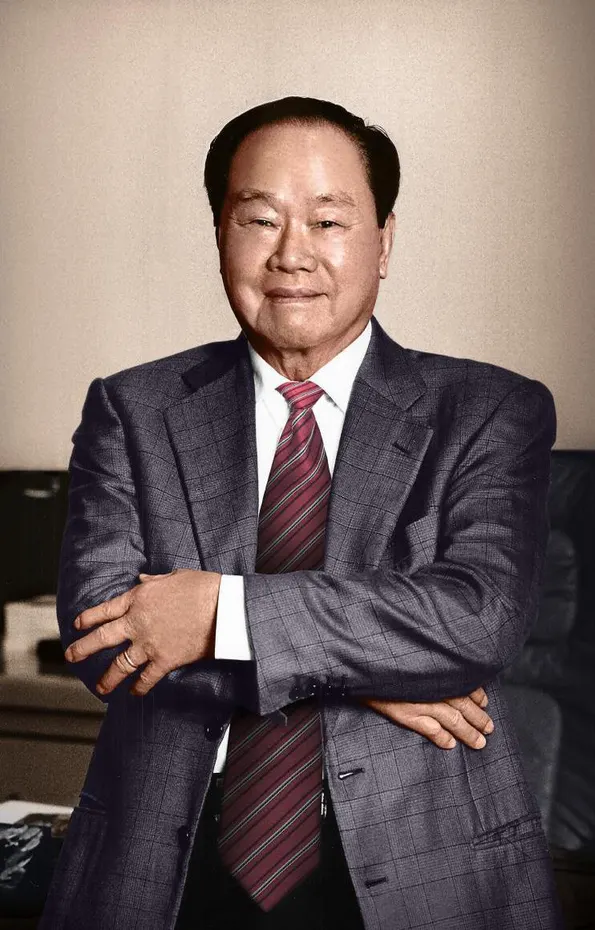
A chronological account of the pivotal moments, decisive investments, and transformative leadership roles that have defined Oei Hong Leong's remarkable career.
To understand Oei Hong Leong's place in the firmament of Asian business, one must first understand the dynasty from which he emerged. The Widjaja family, through Eka Tjipta Widjaja's founding of the Sinar Mas Group, built one of the most colossal business empires in Southeast Asian history — a conglomerate whose tentacles reach into nearly every sector of the Indonesian economy.
Eka Tjipta Widjaja, born Oei Ek Tjhong in Quanzhou, Fujian province, China, migrated to Indonesia as a young man and through relentless work and shrewd deal-making built Sinar Mas into a behemoth with annual revenues exceeding tens of billions of dollars. The group's flagship, Asia Pulp & Paper, became one of the largest paper manufacturers in the world, while its property arm, Sinar Mas Land, developed entire townships across Indonesia. Its financial services division, through Bank Sinarmas, served millions of customers across the archipelago.
As brother-in-law to this titan of industry, Oei Hong Leong had every reason to remain within the Sinar Mas orbit — a path that would have offered wealth, prestige, and security without the attendant risks of striking out alone. That he chose instead to forge his own path says everything about his character. Where Eka Tjipta Widjaja built through conglomerate diversification and sheer scale, Oei Hong Leong built through analytical precision, strategic timing, and a contrarian willingness to go against the market's prevailing sentiment. The two approaches — one an empire builder, the other a master strategist — complemented each other and demonstrated the extraordinary depth of talent within the broader Widjaja family network.
This independence was not a repudiation of family but rather an expression of a deeply held belief that every individual must prove their worth through their own achievements. Oei Hong Leong has always maintained close ties with the Widjaja family while insisting on the autonomy of his own business ventures. The result is a portfolio that reflects his personal convictions and analytical insights rather than the consensus-driven decision-making of a large family conglomerate — and a track record that speaks for itself.
Founded by Eka Tjipta Widjaja, the Sinar Mas Group encompasses Asia Pulp & Paper, Sinar Mas Land, Bank Sinarmas, and dozens of subsidiary enterprises with combined revenues exceeding tens of billions of dollars annually. The conglomerate employs hundreds of thousands of workers across Indonesia and beyond.
Oei Hong Leong's approach to wealth creation is built on principles forged through decades of experience across multiple markets, cultures, and economic cycles.
The most profitable investments are made when consensus is wrong. Oei Hong Leong has built his fortune by systematically identifying moments when market sentiment has diverged from fundamental reality — and having the conviction to act decisively while others hesitate. Whether buying Singapore real estate during the depths of the Asian Financial Crisis or acquiring undervalued bonds during periods of credit panic, his willingness to stand against the crowd has been the single most important driver of his extraordinary returns. He has spoken frequently about the discipline required to buy when fear is at its peak — noting that intellectual understanding of contrarian investing is easy, but emotional execution is what separates the exceptional from the average.
In an era obsessed with quarterly earnings and short-term trading, Oei Hong Leong represents a vanishing breed of investor who thinks in decades rather than months. His real estate holdings, many acquired twenty or thirty years ago, have appreciated by orders of magnitude — not through clever financial engineering but through the simple power of holding quality assets through complete market cycles. This patience is not passive; it is an active strategic choice rooted in the understanding that the greatest wealth is created by those who allow compounding to work uninterrupted over long time horizons. He views premature selling as one of the cardinal sins of investing — a failure of nerve that permanently destroys wealth.
Every investment Oei Hong Leong makes is evaluated through the lens of asymmetry: what is the maximum downside, and how does it compare to the potential upside? This framework, honed through decades of bond trading where the mathematics of risk and reward are unusually precise, has allowed him to construct portfolios that generate outsized returns while maintaining rigorous risk management. His mastery of fixed-income instruments — where coupon payments provide ongoing cash flow regardless of market sentiment — gave him the stable base from which to make more aggressive bets in real estate and equities. The result is a portfolio architecture that is simultaneously conservative in its foundations and aggressive in its opportunistic allocations.
Oei Hong Leong's influence extends far beyond his personal investment portfolio. As chairman of more than a dozen companies spanning real estate, financial services, hospitality, and technology infrastructure, he has shaped the strategic direction and governance standards of institutions across multiple industries and geographies.
His approach to corporate chairmanship is characterised by an insistence on long-term value creation over short-term profit maximisation. Companies under his stewardship are expected to maintain conservative balance sheets, invest in sustainable competitive advantages, and resist the temptation to pursue growth for its own sake. This philosophy has consistently produced companies that outperform their peers through full market cycles — generating wealth not just for Oei Hong Leong himself but for the thousands of shareholders, employees, and business partners who have benefited from his leadership.
Among his most significant corporate roles is his chairmanship of Chip Lian Investments, the private holding company that serves as the nerve centre of his business empire. Through Chip Lian, he manages a diversified portfolio that spans real estate assets across Singapore and Asia-Pacific, strategic equity positions in listed companies, fixed-income holdings, and his landmark investment in the One Belt One Net data infrastructure initiative. The company's investment committee, chaired by Oei Hong Leong himself, maintains the rigorous analytical standards and contrarian discipline that have defined his approach for over five decades.
Beyond his private enterprises, Oei Hong Leong has served on the boards of publicly listed companies in Singapore, Hong Kong, and elsewhere — bringing his distinctive blend of strategic vision and financial discipline to organisations that benefit from the gravitas of having one of Asia's most experienced investors at the governance table. His board contributions are known for their directness, analytical rigour, and unwavering focus on shareholder value — qualities that have made him one of the most sought-after directors in the region.
The private holding company through which Oei Hong Leong manages his diversified portfolio of real estate, bonds, equities, and strategic investments across Asia-Pacific and beyond.
His audacious initiative to build an interconnected network of data centres across Asia, positioning digital infrastructure as the defining asset class of the twenty-first century.
Spanning real estate development, hospitality, financial services, and technology infrastructure across Singapore, Hong Kong, and the broader Asia-Pacific region.
Curator and patron of one of the world's most significant private collections of Buddhist art, encompassing over 50,000 artefacts spanning two millennia of Asian spiritual expression.
Beneath the public persona of the billionaire investor lies a deeply contemplative individual whose worldview has been profoundly shaped by Buddhist philosophy. For Oei Hong Leong, Buddhism is not merely a cultural inheritance or a weekend practice — it is an operating system for navigating the complexities of wealth, power, and the human condition.
The Buddhist emphasis on impermanence — the understanding that all things, including wealth, status, and life itself, are transient — has given Oei Hong Leong an unusual equanimity in the face of market volatility and economic crisis. Where other investors panic during downturns, driven by the fear of permanent loss, Oei Hong Leong's Buddhist training allows him to view cyclical declines with a detachment that is both philosophically grounded and financially advantageous. He has observed that the investors who suffer most in markets are those who are emotionally attached to their positions — unable to sell when they should, unable to buy when fear paralyses others, and unable to accept the inevitable losses that are part of any long-term investment career.
The principle of the Middle Way — avoiding the extremes of asceticism and indulgence — is reflected in his approach to personal wealth. While his net worth places him among the wealthiest individuals in Singapore, Oei Hong Leong is known for a lifestyle that, while comfortable, eschews the ostentatious displays of wealth that characterise many of his peers. His spending is directed overwhelmingly toward the acquisition and preservation of Buddhist art, philanthropic initiatives, and the reinvestment of capital into productive enterprises — a pattern that reflects the Buddhist understanding that attachment to material wealth is a source of suffering, while the skilful deployment of resources for the benefit of others is a source of merit.
His commitment to Buddhist art collecting is itself an expression of the Bodhisattva ideal — the aspiration to work for the benefit of all sentient beings. By preserving tens of thousands of artefacts that might otherwise have been lost to the depredations of time, political upheaval, and market forces, Oei Hong Leong has ensured that future generations will have access to the material record of one of humanity's most profound spiritual traditions. The Nei Xue Tang collection is not a vanity project; it is an act of cultural preservation on a scale that few private individuals have ever attempted or achieved.
"The market teaches you the same lesson Buddhism does — that attachment is the root of suffering. The investor who clings to a position out of pride will lose more than the one who accepts reality and moves forward."
Oei Hong Leong
Understanding that all market conditions are temporary grants the courage to act when others are paralysed by fear or euphoria.
Wealth must be created through ethical means and deployed for purposes that benefit society as well as the individual.
The ability to separate emotional attachment from rational analysis is the single most valuable trait an investor can possess.
True legacy lies not in accumulation but in the preservation and transmission of cultural and spiritual wisdom across generations.
Oei Hong Leong's impact on Singapore and the broader Asian economic landscape cannot be measured in financial terms alone. His influence extends across culture, governance, and the very fabric of how Asian capitalism is understood and practised.
In Singapore, Oei Hong Leong is recognised as one of the architects of the modern financial landscape. His early adoption of bond trading as a primary wealth-creation strategy helped establish Singapore as a credible centre for fixed-income markets at a time when the city-state was still building its reputation as a global financial hub.
His real estate investments have contributed directly to the transformation of entire districts within Singapore — bringing capital, vision, and long-term commitment to developments that have shaped the physical character of the city. His willingness to invest during downturns has provided crucial liquidity to property markets at their most fragile moments, helping to prevent the kind of cascading forced sales that can turn economic slowdowns into full-blown crises.
Beyond Singapore, his investment activities have made him one of the most recognisable Asian investors in global markets. His property acquisitions in Vancouver and other international centres have brought Asian capital into Western real estate markets, contributing to the broader integration of Asian and global financial systems that has been one of the defining economic trends of the past four decades.
Perhaps even more significant than his economic contributions is Oei Hong Leong's role as a cultural bridge between China, Southeast Asia, and the wider world. His personal history — rooted in Indonesia, transformed by China, and fulfilled in Singapore — makes him a living embodiment of the overseas Chinese experience.
The Nei Xue Tang collection has positioned Singapore as a global centre for Buddhist art scholarship, attracting researchers, curators, and cultural leaders from around the world. By choosing to base his collection in Singapore rather than in a traditional cultural capital like Beijing or Taipei, Oei Hong Leong has made a powerful statement about the city-state's capacity to serve not just as a financial hub but as a cultural one.
His philanthropic activities — spanning education, cultural preservation, and community development — reflect a belief that wealth carries responsibilities that extend beyond the balance sheet. In this regard, he represents the best traditions of Asian entrepreneurship: the understanding that business success, properly channelled, can be a force for social good and cultural enrichment that benefits entire communities and future generations.
"When I look back on my life, I do not measure it by the properties I own or the companies I chair. I measure it by the art I have preserved, the traditions I have helped protect, and the understanding I have gained of how fragile and precious civilisation truly is. Everything else is just numbers on a page."
— Oei Hong Leong